Complete Diploma in Trauma Surgery (Adult & Paediatric)
Original price was: £1,680.00.£1,195.00Current price is: £1,195.00.
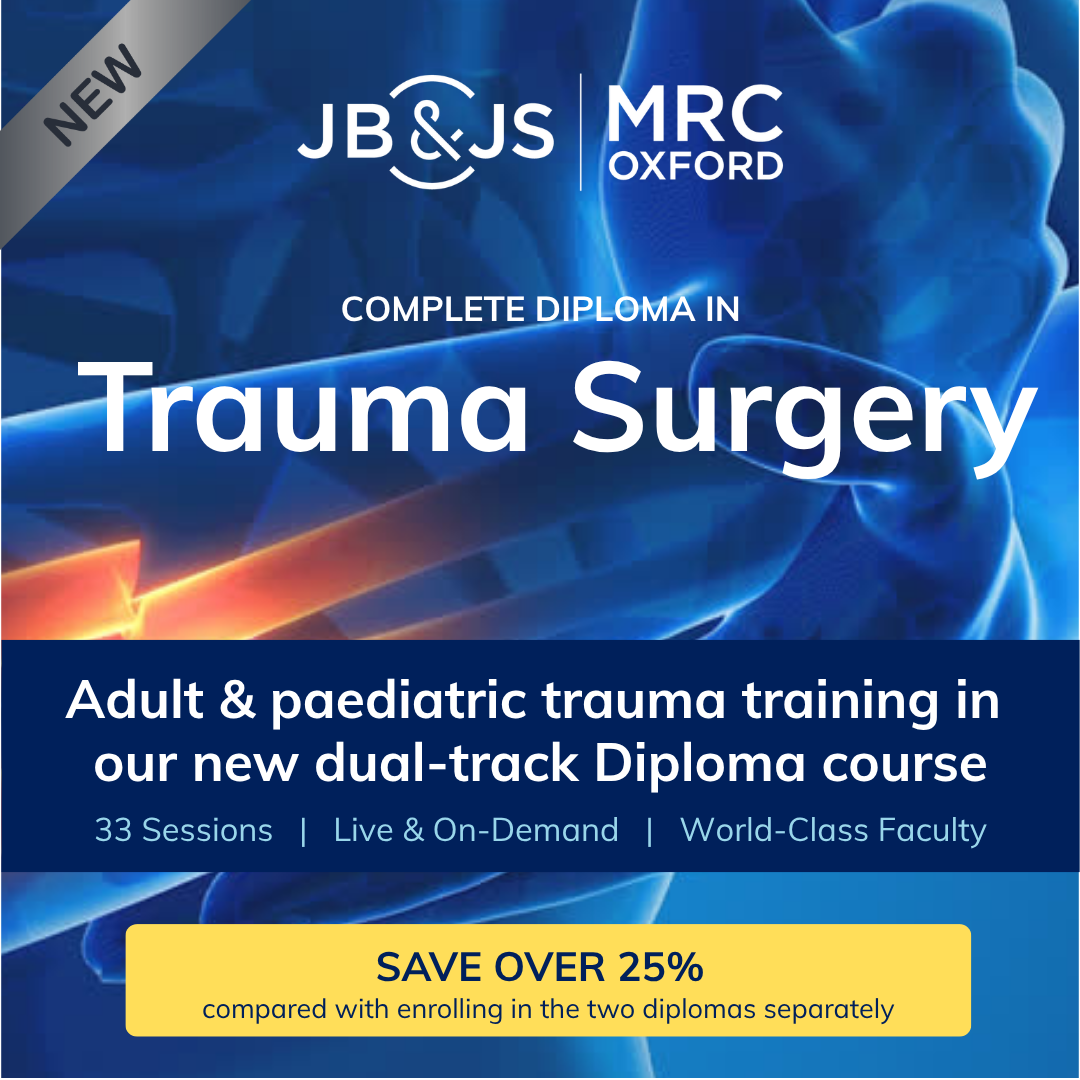
The Complete Diploma in Trauma Surgery brings together two distinct diploma courses — Adult Trauma and Paediatric Trauma — each with its own curriculum, assessment and certificate. Both are taught in considerable detail through live sessions with world-class faculty, so you reach a genuinely in-depth understanding of one before moving to the next.
We recommend enrolling in the Complete Diploma in Trauma Surgery — available at a saving of over 25% compared with enrolling in the two diplomas individually. The Adult Trauma and Paediatric Trauma diplomas are also available separately if you prefer to focus on one.
Download the syllabus or scroll down for full details, including:
- Course Directors
- Explore some of our internationally renowned faculty
- Complete curriculum
- Format
- Assessment and certificate
- Complimentary 30-day subscription to JBJS Journals (online)
- 10% Alumni Discount
- Referral Gift Program
Course Fees:
- Diploma in Adult Trauma Surgery (if purchased separately): £840
- Diploma in Paediatric Trauma Surgery (if purchased separately): £840
- Complete Diploma in Trauma Surgery (includes the full Adult and Paediatric diplomas): £1,195
Out of stock
Description
The Complete Diploma in Trauma Surgery brings together two distinct diploma courses — Adult Trauma and Paediatric Trauma — each with its own curriculum, assessment and certificate.
Surgeons enrolled in the course begin with the Adult Trauma Diploma in September, building a thorough grounding in the full adult orthopaedic trauma curriculum across five modules. The Paediatric Trauma Diploma follows in February 2027, covering the distinct demands of the immature skeleton. The programme culminates in a dedicated complex decision-making module — three highly interactive live sessions of case-based clinical discourse with faculty.
The Complete Diploma in Trauma Surgery curriculum is designed for:
- Senior residents and fellows who want complete trauma coverage before fellowship.
- Trauma and orthopaedic surgeons who treat both adult and paediatric injuries.
- Consultants in general hospitals managing paediatric trauma alongside an adult workload.
- Candidates preparing for national and international fellowship examinations across both curricula.
If you prefer, you have the option to take either the Diploma in Adult Trauma or Paediatric Trauma on its own:
Course Fees:
The Complete Diploma in Trauma Surgery is available at £1,195 — covering both the Adult and Paediatric diploma courses in full. Each diploma is also available individually at £840 if you prefer to focus on solely the Adult or Paediatric track:
Discounts available for applicants from under-resourced regions or under special circumstances. For more details please contact Sue Turner at trauma@mrcoxford.co.uk
Programme Structure:
Format: Online (Live Teaching with On-Demand Access)
Sessions: 33 Weekly Expert-Led Online Seminars across 10 modules
When: Every Monday at 6:00pm (UK Time)
Course Dates: 14th September 2026 through to May 2027
Curriculum, Course Directors and Certificates
Diploma in Adult Trauma Surgery
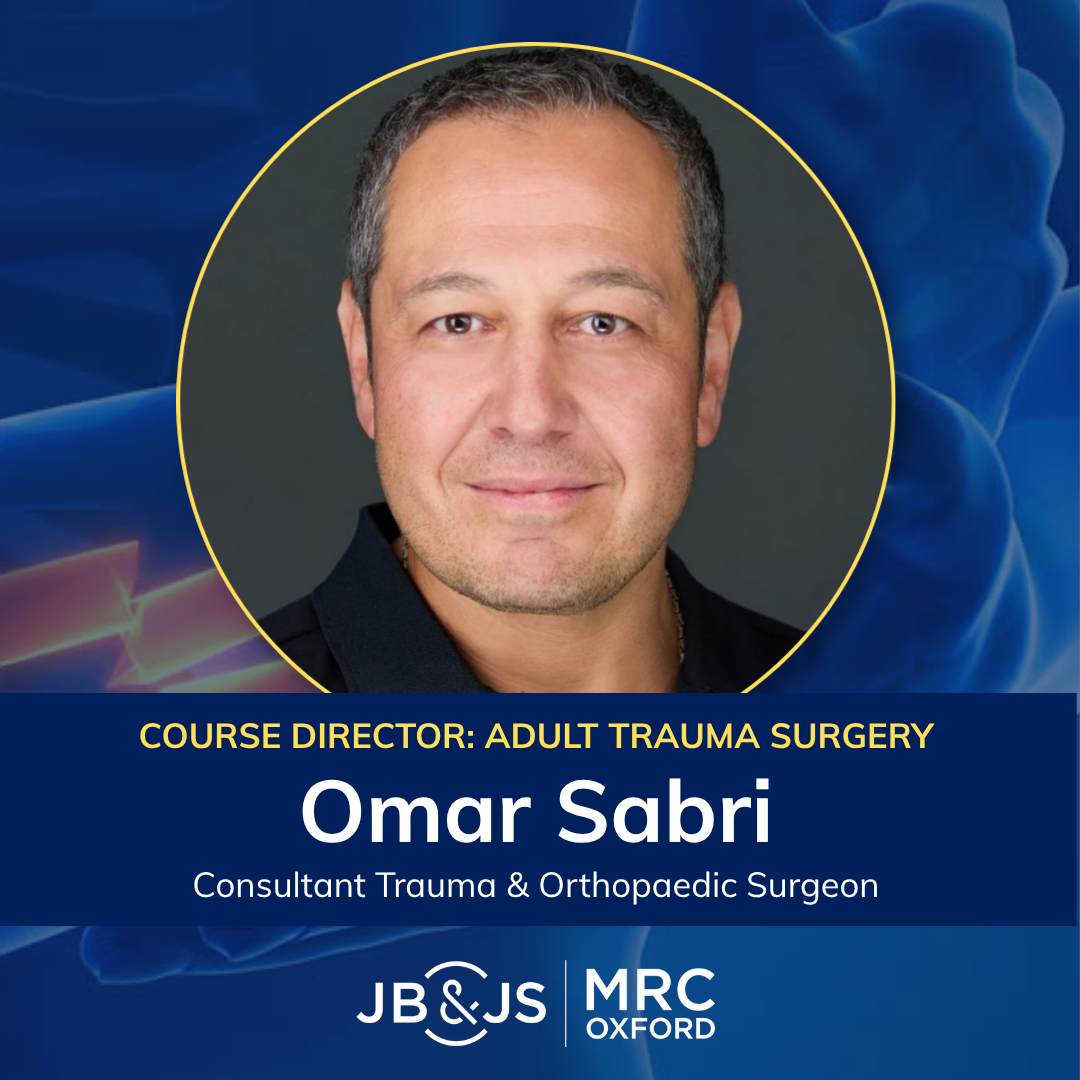
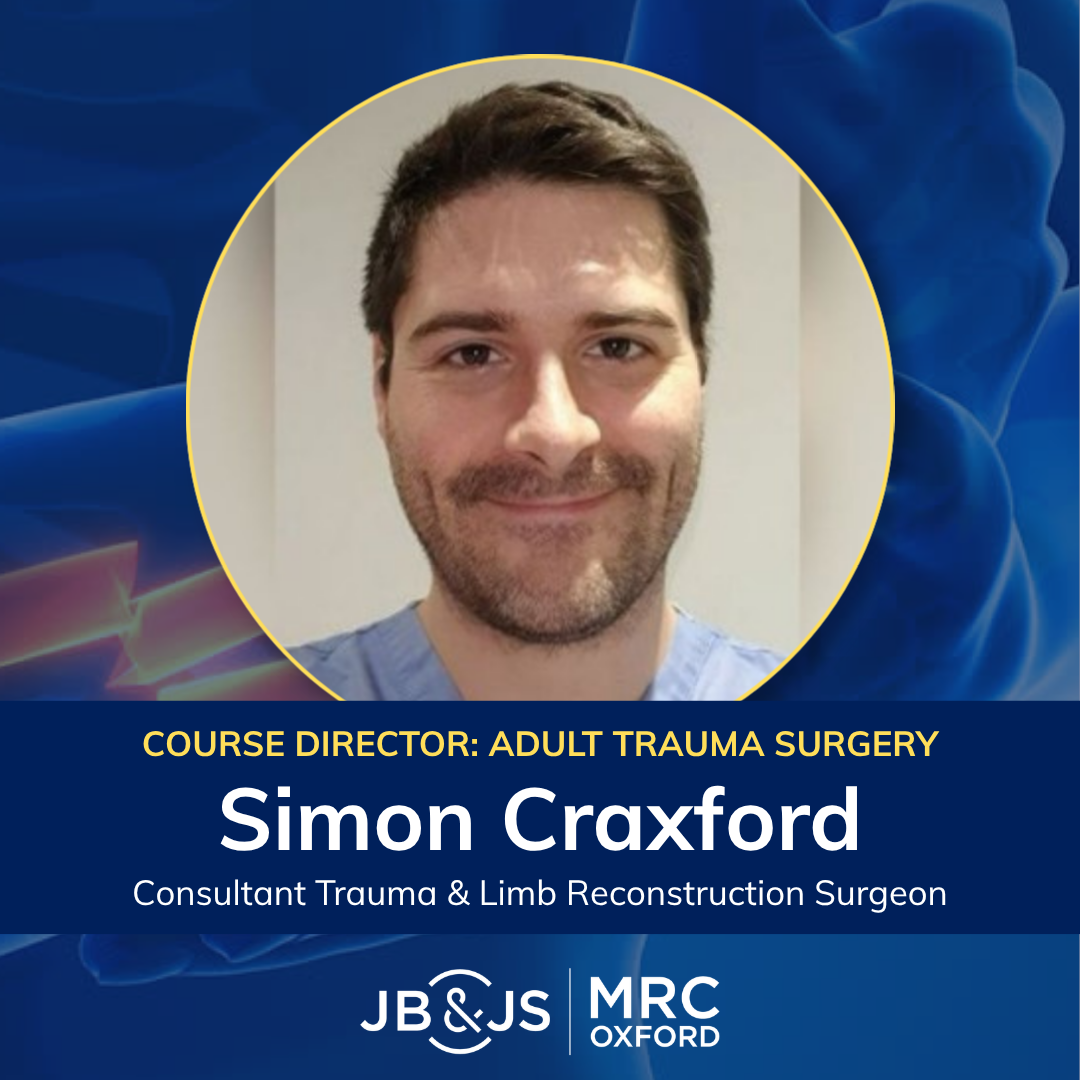
COURSE DIRECTORS
Omar Sabri MBBCh, MS (Orth), FRCS (Tr & Orth)
Consultant Trauma & Orthopaedic Surgeon
Simon Craxford BSc, MBChB, PhD, FRCS (Tr & Orth)
Consultant Trauma & Limb Reconstruction Surgeon
LEARNING OUTCOMES
- Apply ATLS principles and damage control orthopaedics to the polytrauma patient.
- Classify and manage fractures across all anatomical regions using current evidence-based algorithms.
- Recognise and manage complications including non-union, fracture-related infection and periprosthetic fracture.
- Apply principles of trauma care to fragility and geriatric injury contexts.
- Prepare for fellowship exams with structured, case-based teaching.
CURRICULUM
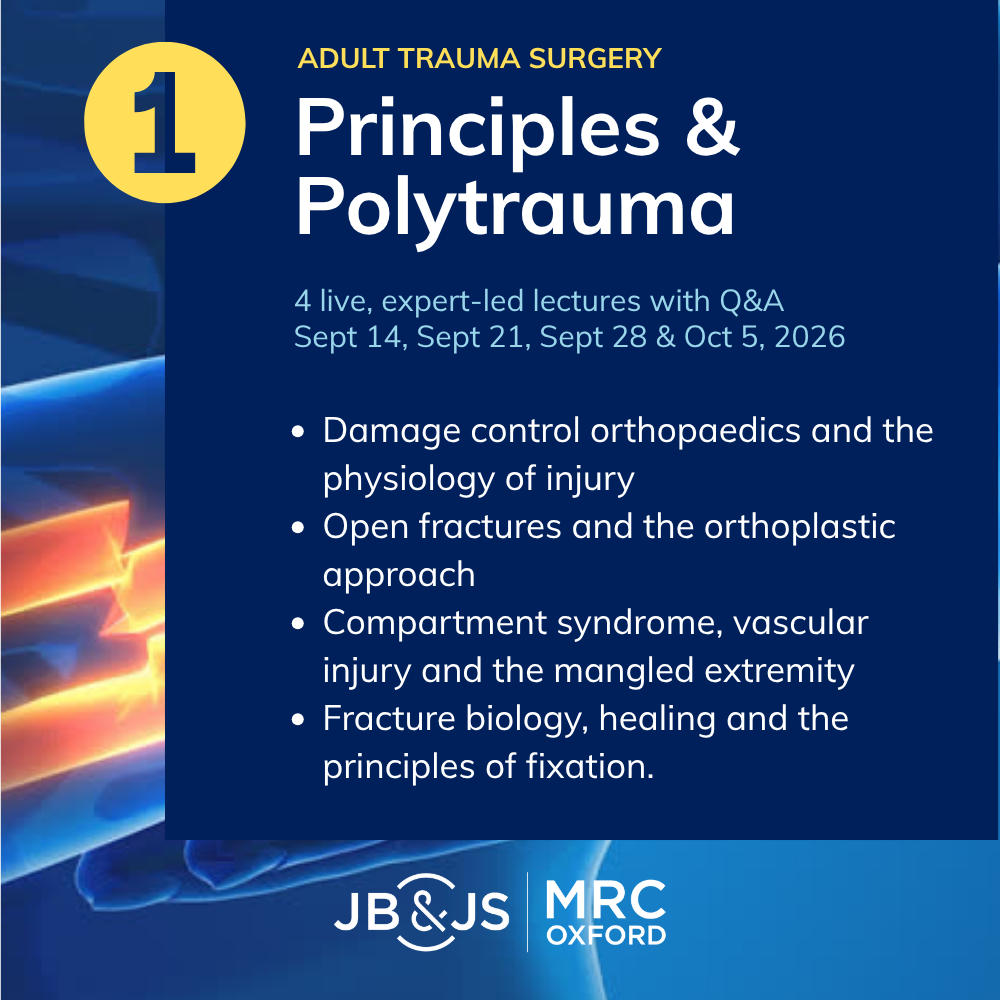
Adult Trauma Module 1: Principles & Polytrauma
- Damage Control Orthopaedics and the Physiology of Injury
- Open Fractures and the Orthoplastic Approach
- Compartment Syndrome, Vascular Injury and the Mangled Extremity
- Fracture Biology, Healing and Principles of Fixation
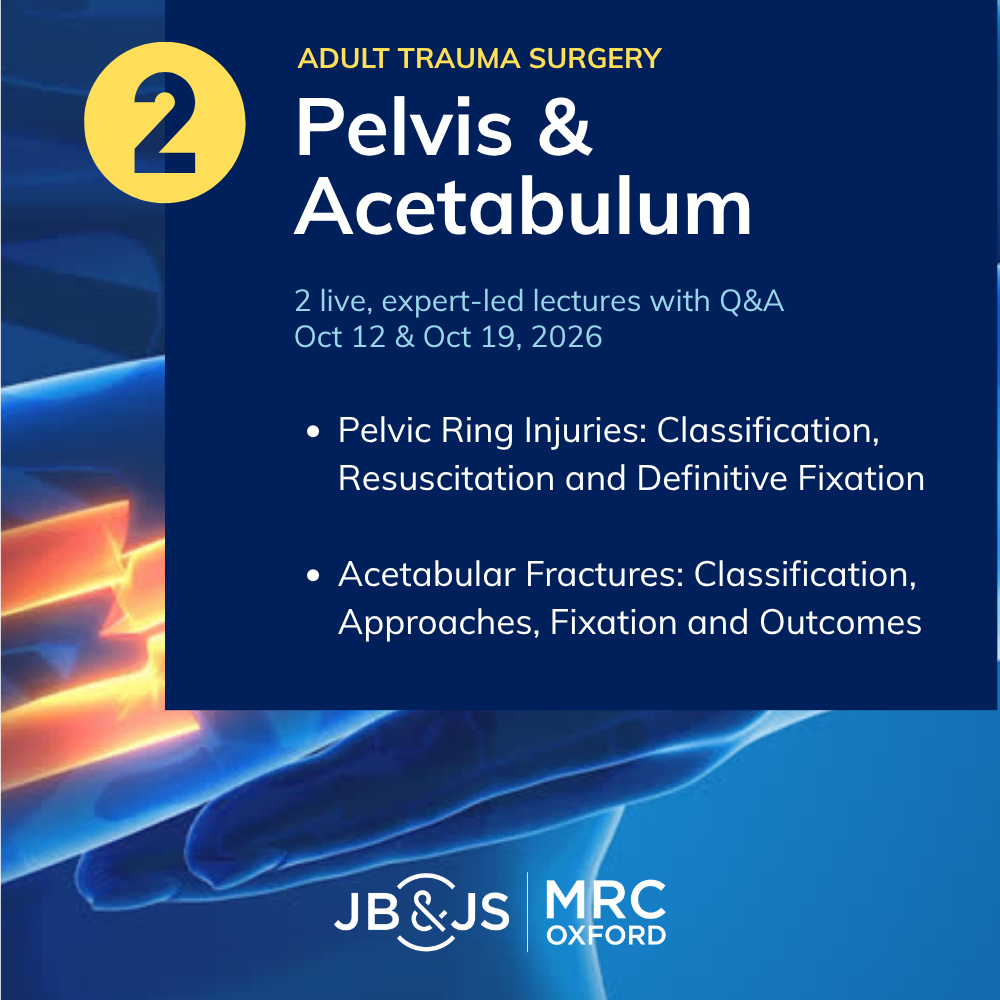
Adult Trauma Module 2: Pelvis & Acetabulum
- Pelvic Ring Injuries: Classification, Resuscitation and Definitive Fixation
- Acetabular Fractures: Classification, Approaches, Fixation and Outcomes
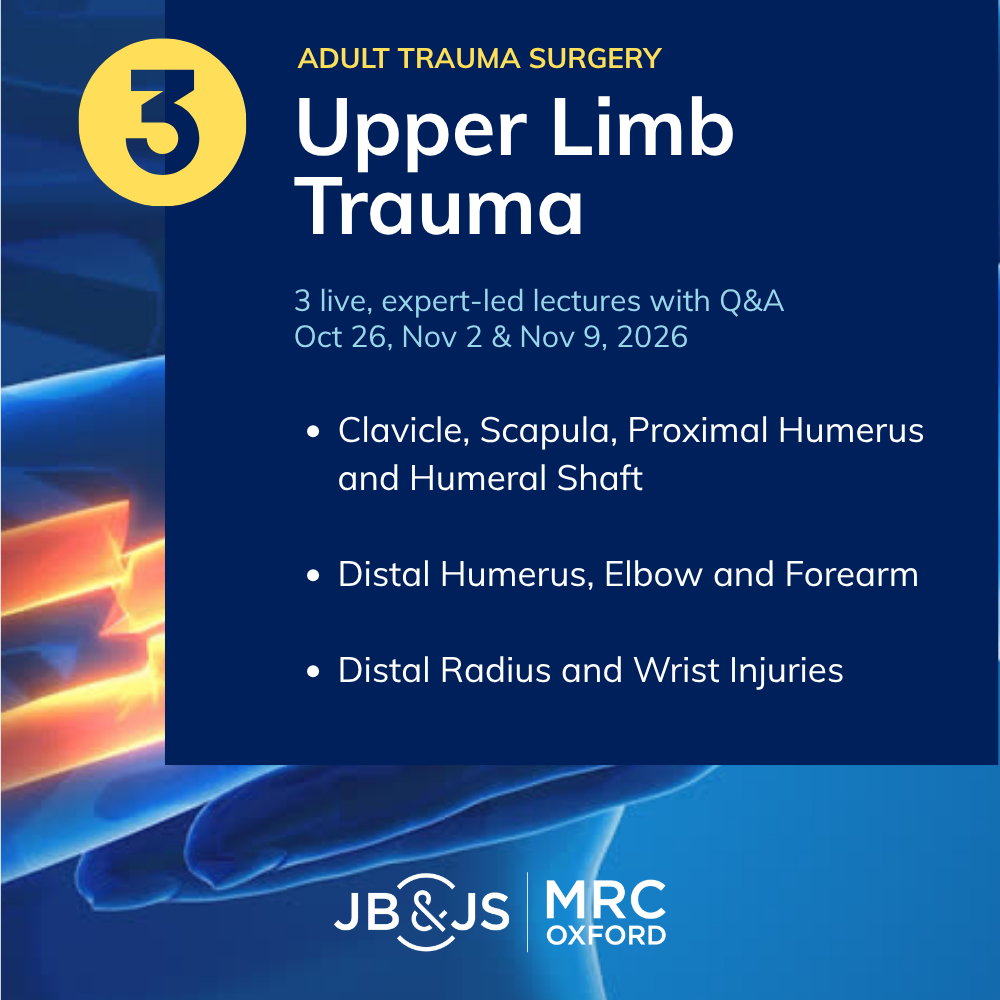
Adult Trauma Module 3: Upper Limb Trauma
- Clavicle, Scapula, Proximal Humerus and Humeral Shaft
- Distal Humerus, Elbow and Forearm
- Distal Radius and Wrist Injuries
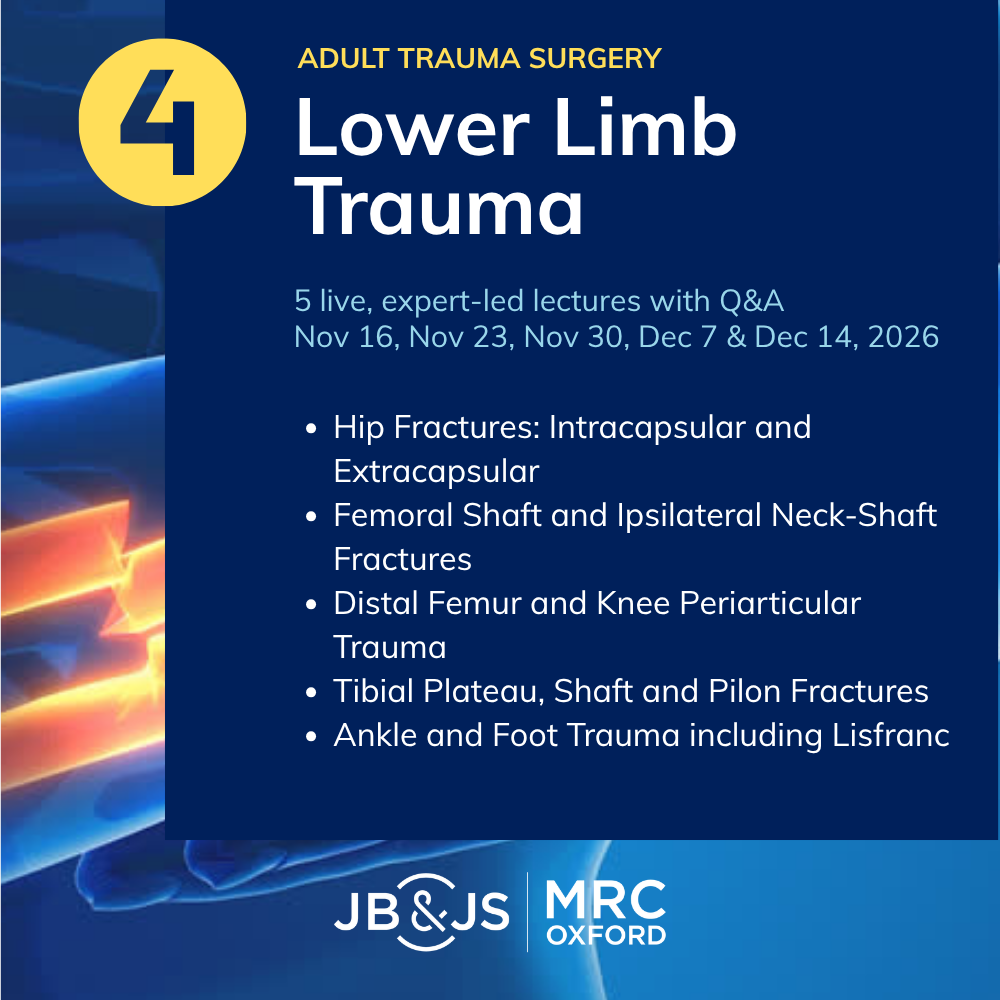
Adult Trauma Module 4: Lower Limb Trauma
- Hip Fractures: Intracapsular and Extracapsular
- Femoral Shaft and Ipsilateral Neck-Shaft Fractures
- Distal Femur and Knee Periarticular Trauma
- Tibial Plateau, Shaft and Pilon Fractures
- Ankle and Foot Trauma including Lisfranc
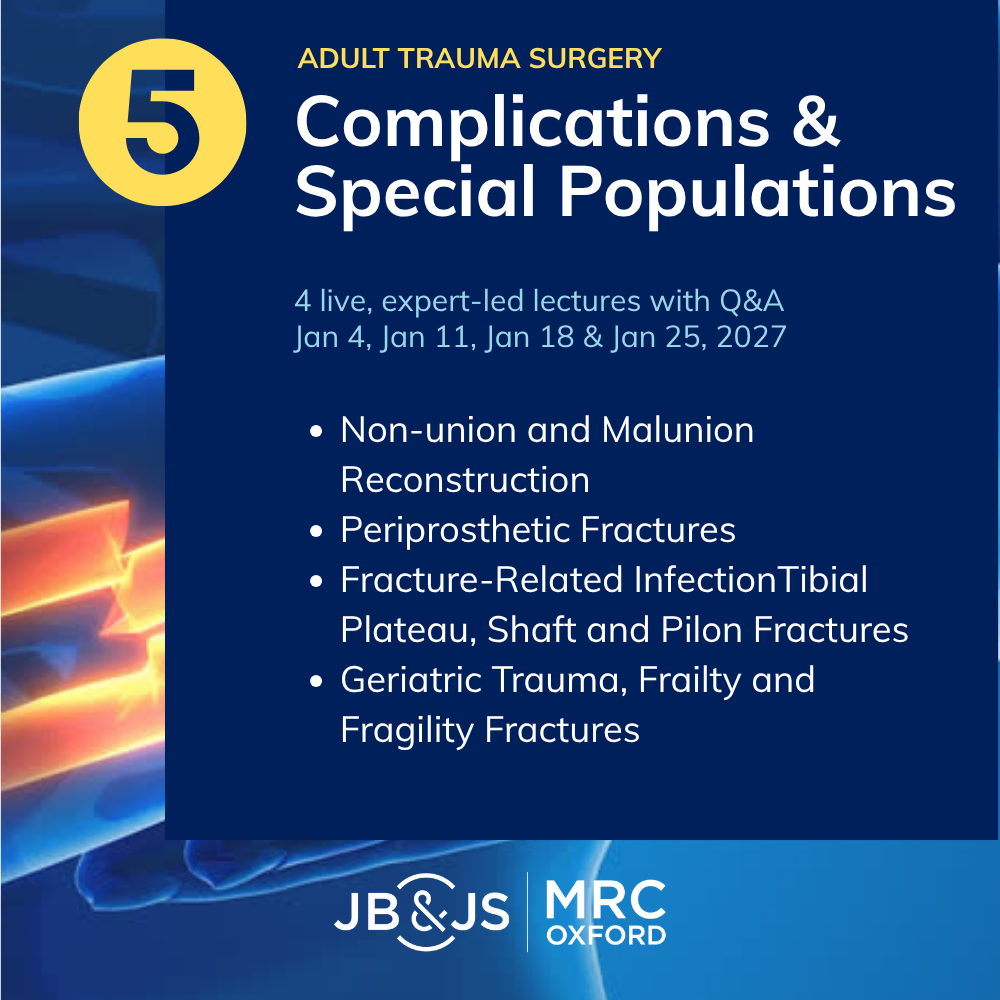
Adult Trauma Module 5: Complications & Special Populations
- Non-union and Malunion Reconstruction
- Periprosthetic Fractures
- Fracture-Related Infection
- Geriatric Trauma, Frailty and Fragility Fractures
KNOWLEDGE ASSESSMENT
- Weekly formative MCQs allow delegates to track their progress and consolidate learning. (Weekly, September 2026 to January 2027)
- Summative Single Best Answer paper assessing knowledge across the full curriculum. (Due February 2027)
- Written Essays: Delegates will submit 1,500-word essays on three topics relating to the content taught in the Adult Trauma curriculum. Topics will be assigned in January 2027, with essays due in February 2027.
CERTIFICATE & ACCREDITATION
On successful completion of this JBJS MRC Oxford Diploma, delegates receive a digital certificate of completion.
The Journal of Bone and Joint Surgery Inc. is accredited by the Accreditation Council for Continuing Medical Education (ACCME) to provide continuing medical education (AMA PRA Category 1™ Credit) for physicians.
Diploma in Paediatric Trauma Surgery
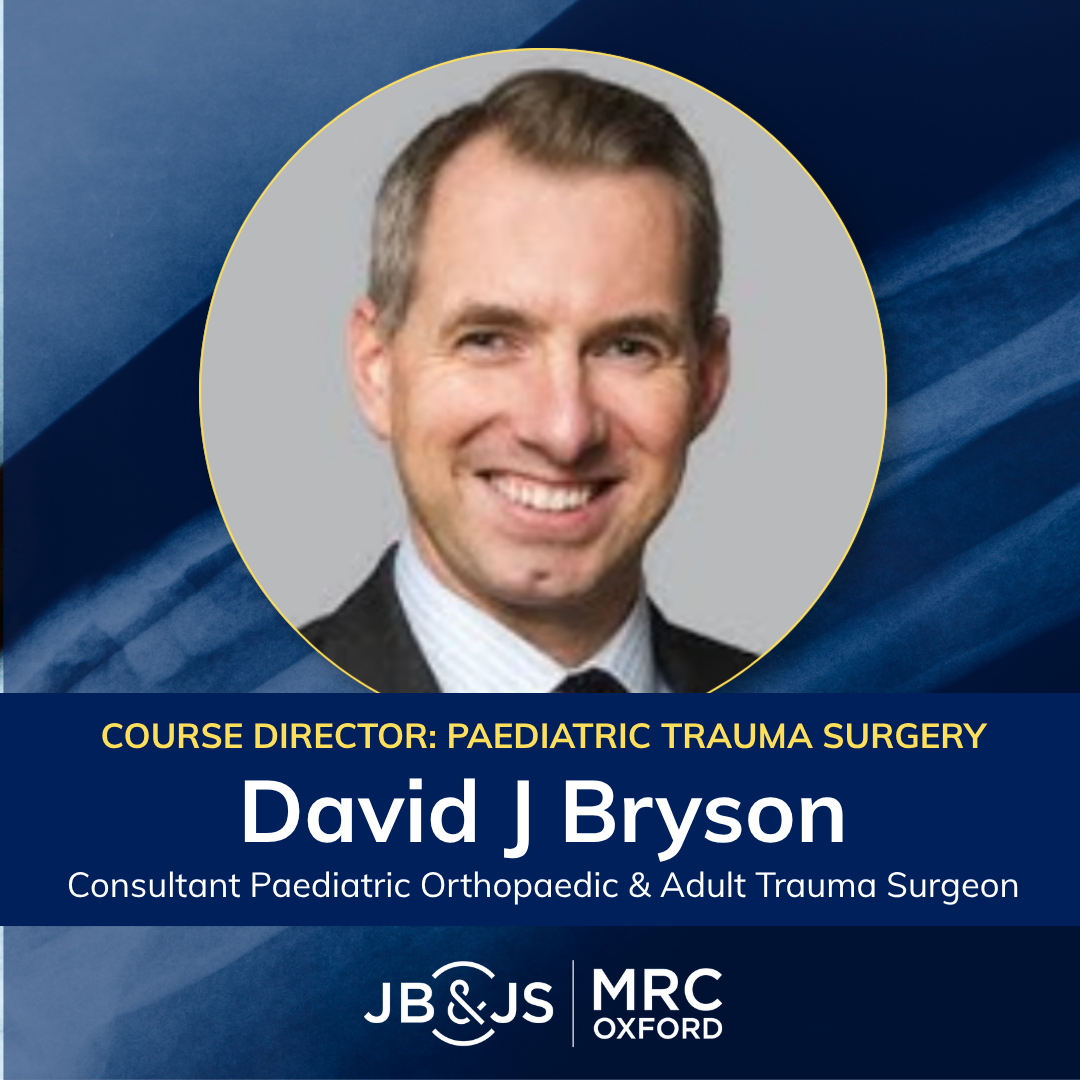
COURSE DIRECTOR
David Bryson MBChB, FRCS (Eng)
Consultant Paediatric Orthopaedic & Adult Trauma Surgeon
LEARNING OUTCOMES
- Recognise and manage injuries specific to the immature skeleton, including physeal and apophyseal trauma.
- Apply paediatric-modified resuscitation principles to the polytrauma child.
- Identify and act on non-accidental injury, including imaging, safeguarding referral and report-writing.
- Manage the high-volume conditions seen by every clinician treating paediatric trauma, including supracondylar fractures, forearm injuries and femoral and tibial trauma.
- Recognise and manage rarer but high-stakes paediatric injuries, including spine trauma, open fractures and complications of failed treatment.
- Prepare for fellowship exams with structured, case-based teaching.
CURRICULUM
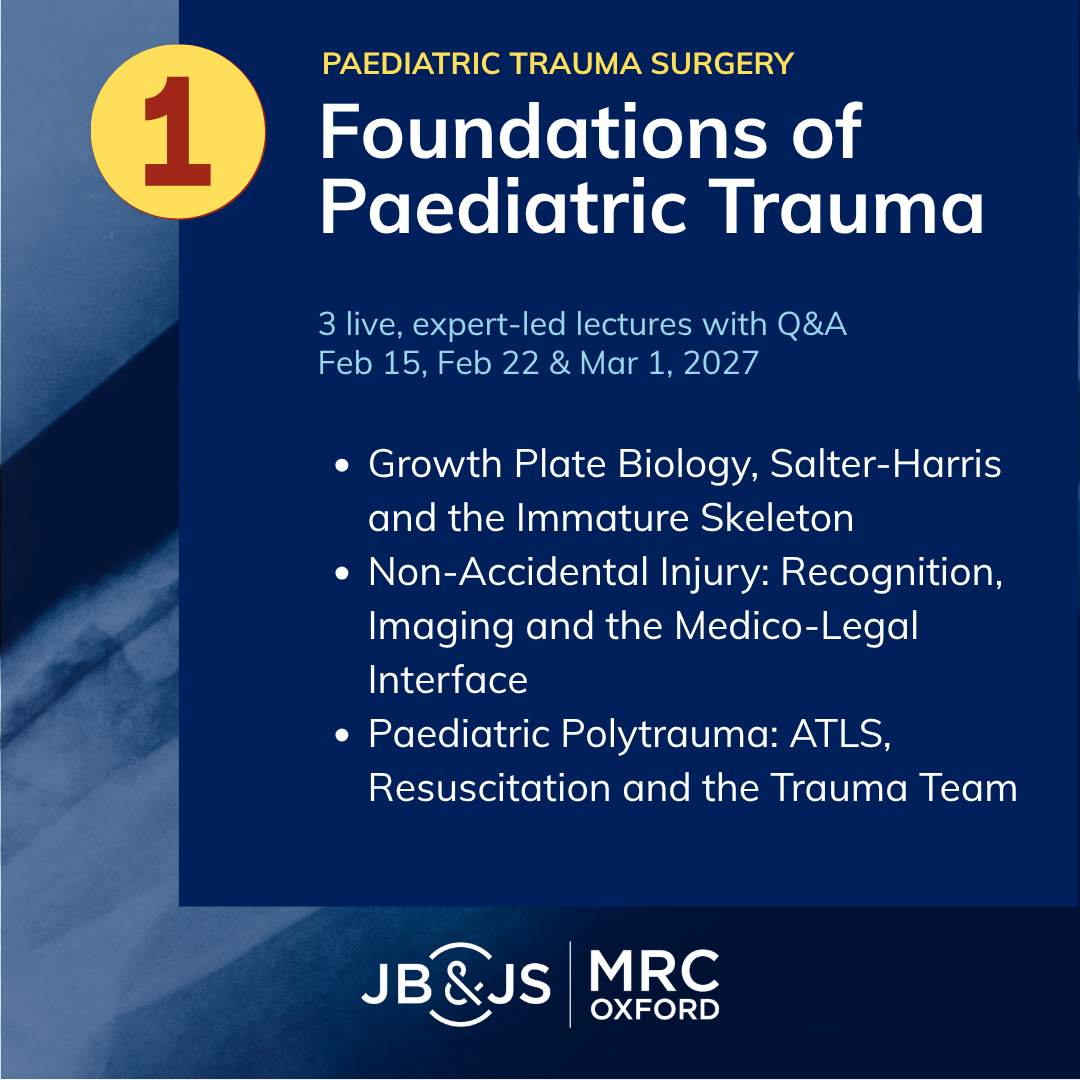
Paediatric Trauma Module 1: Foundations
- Growth Plate Biology, Salter-Harris and the Immature Skeleton
- Non-Accidental Injury: Recognition, Imaging and the Medico-Legal Interface
- Paediatric Polytrauma: ATLS, Resuscitation and the Trauma Team
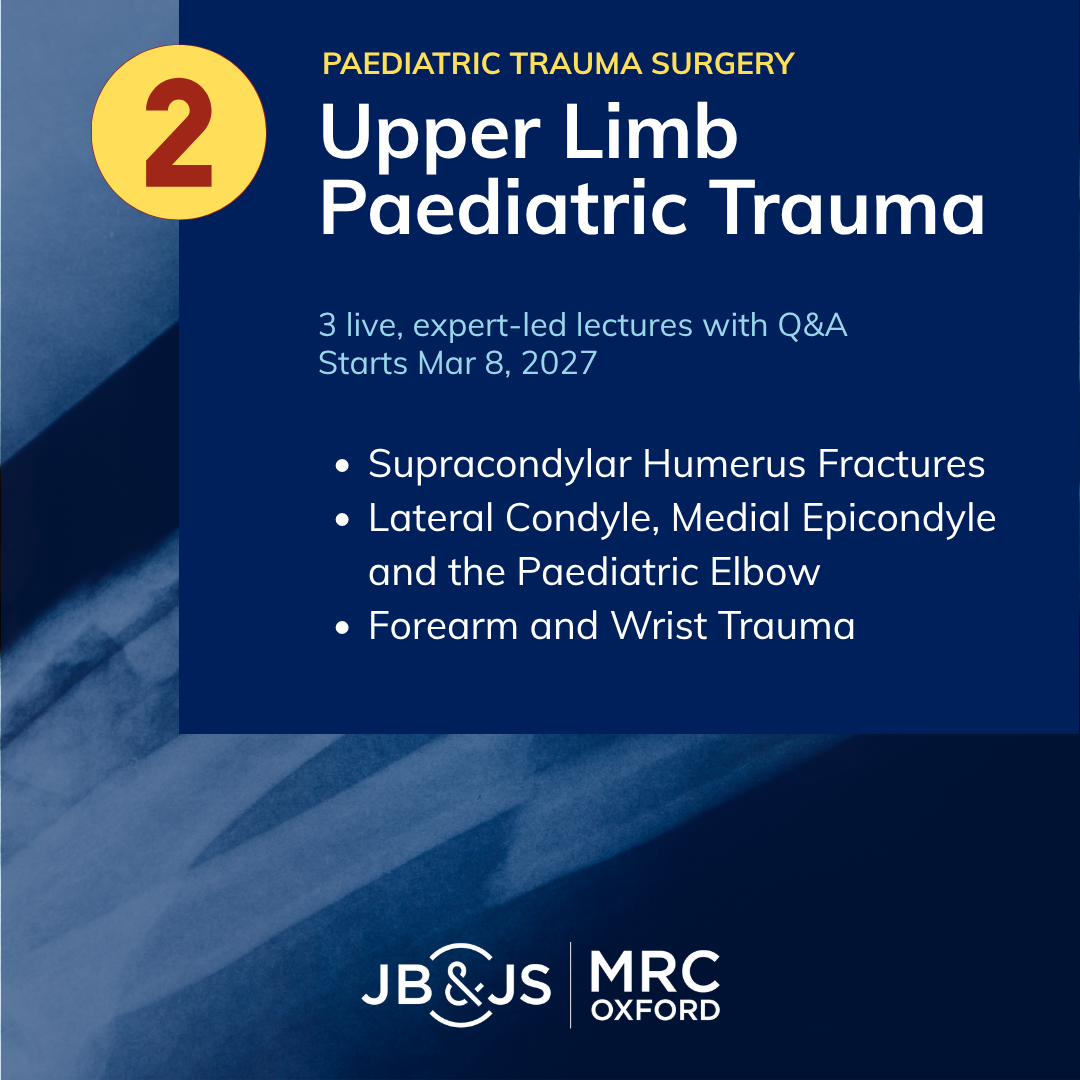
Paediatric Trauma Module 2: Paediatric Upper Limb Trauma
-
Supracondylar Humerus Fractures
- Lateral Condyle, Medial Epicondyle and the Paediatric Elbow
-
Forearm and Wrist Trauma
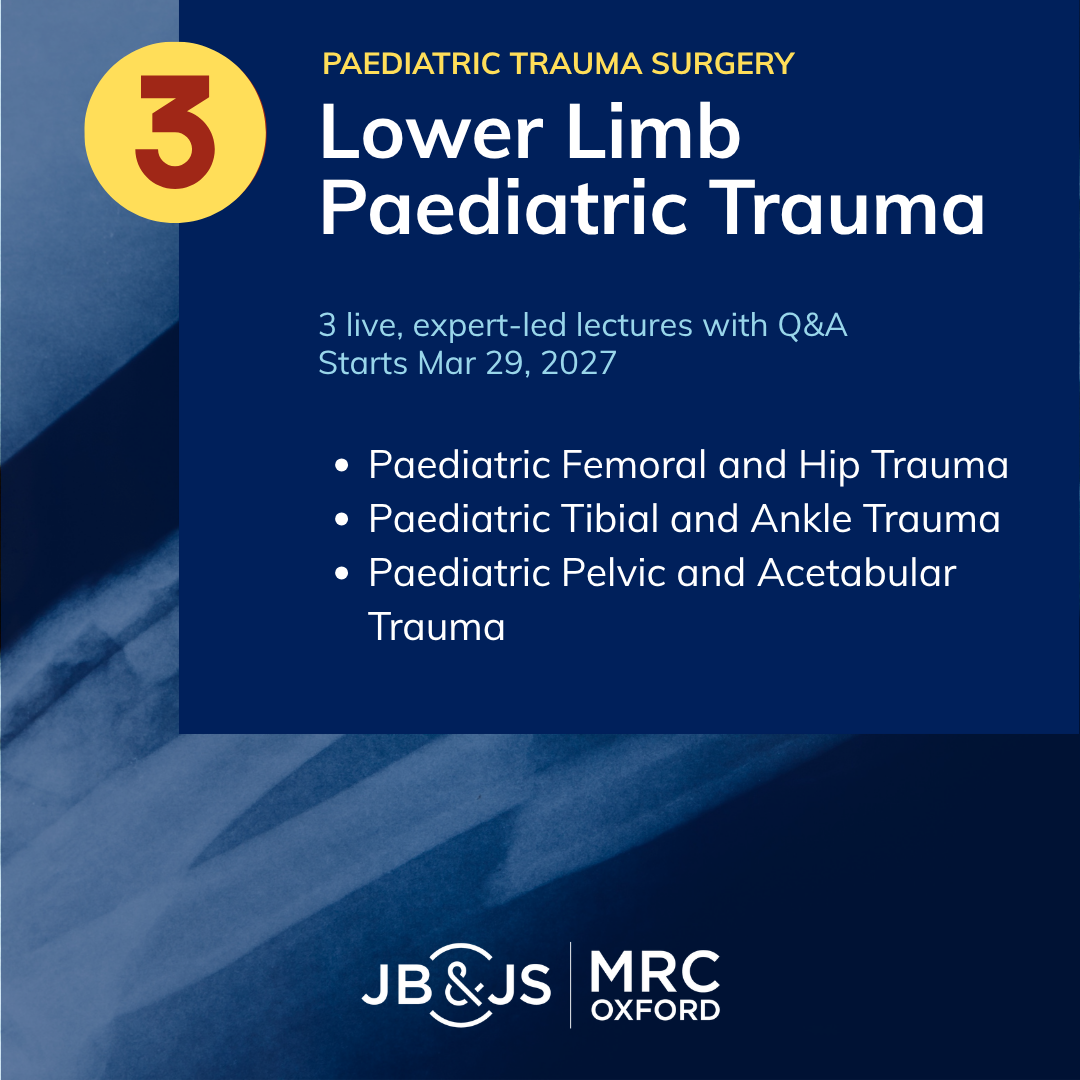
Paediatric Trauma Module 3: Paediatric Lower Limb Trauma
-
Paediatric Femoral and Hip Trauma
-
Paediatric Tibial and Ankle Trauma
-
Paediatric Pelvic and Acetabular Trauma
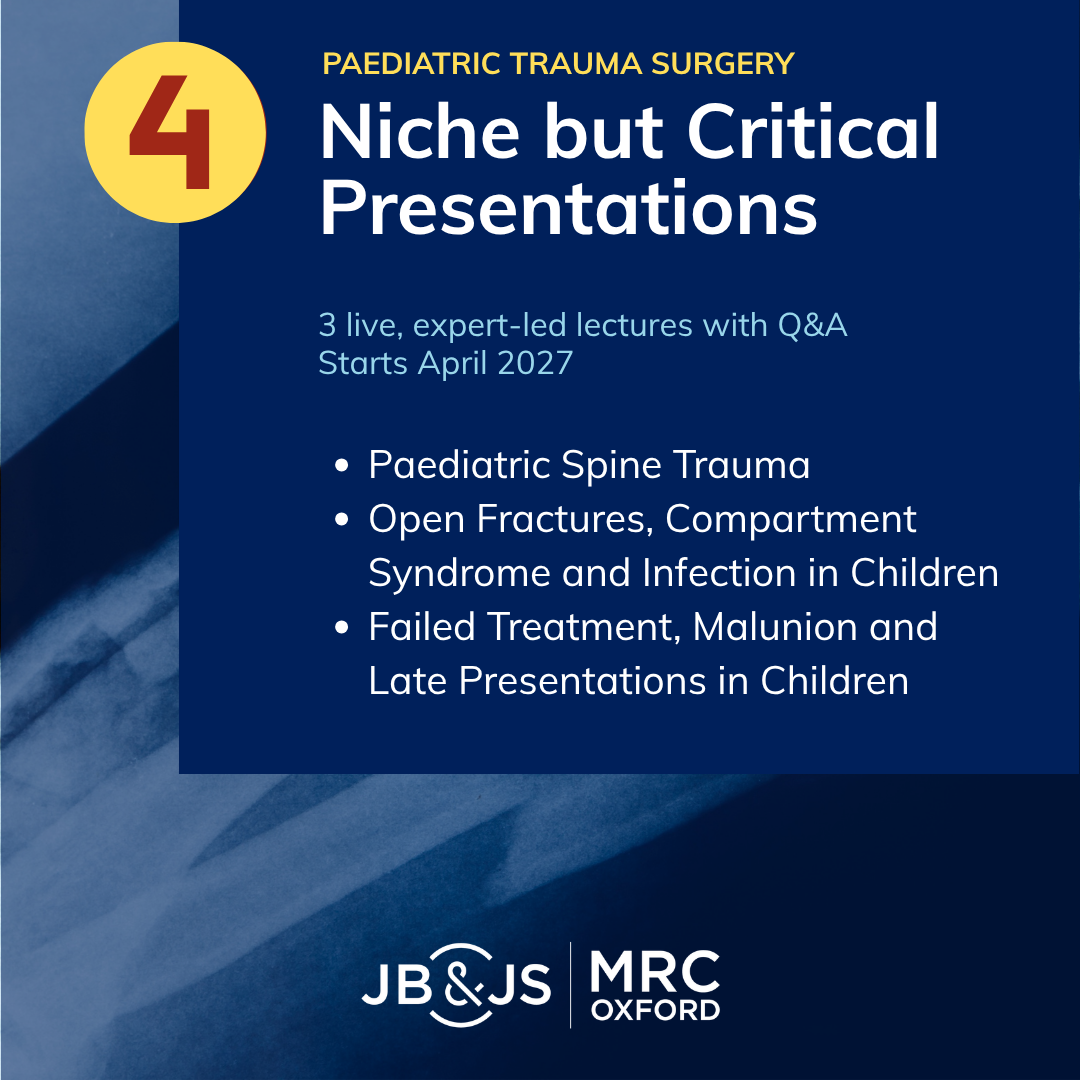
Paediatric Trauma Module 4: Niche but Critical
- Paediatric Spine Trauma
- Open Fractures, Compartment Syndrome and Infection in Children
- Failed Treatment, Malunion and Late Presentations in Children
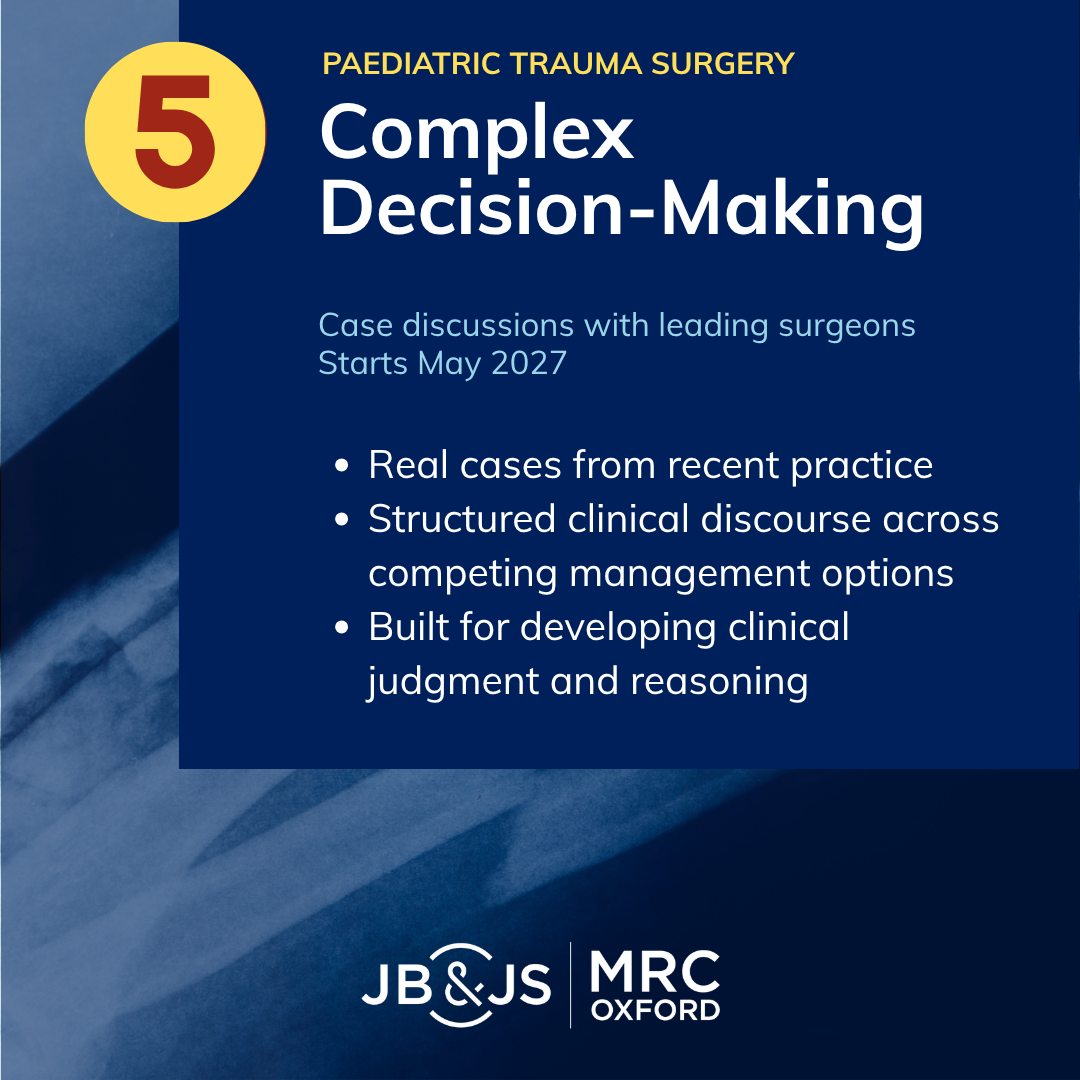
Paediatric Trauma Module 5: Complex Decision-Making
Three live sessions focused entirely on complex decision-making — case-based, interactive, and designed around the questions that do not have a single right answer.
KNOWLEDGE ASSESSMENT
- Weekly formative MCQs allow delegates to track their progress and consolidate learning. (Weekly, January 2027 to May 2027)
- Summative Single Best Answer paper assessing knowledge across the full curriculum. (Due May 2027)
- Written Essays: Delegates will submit 1,500-word essays on three topics relating to the content taught in the Paediatric Trauma curriculum. Topics will be assigned in April 2027, with essays due in May 2027.
CERTIFICATE & ACCREDITATION
On successful completion of this JBJS MRC Oxford Diploma, delegates receive a digital certificate of completion.
The Journal of Bone and Joint Surgery, Inc. is accredited by the Accreditation Council for Continuing Medical Education (ACCME) to provide continuing medical education for physicians. Participants may be eligible to claim AMA PRA Category 1™ Credit for designated educational activities.
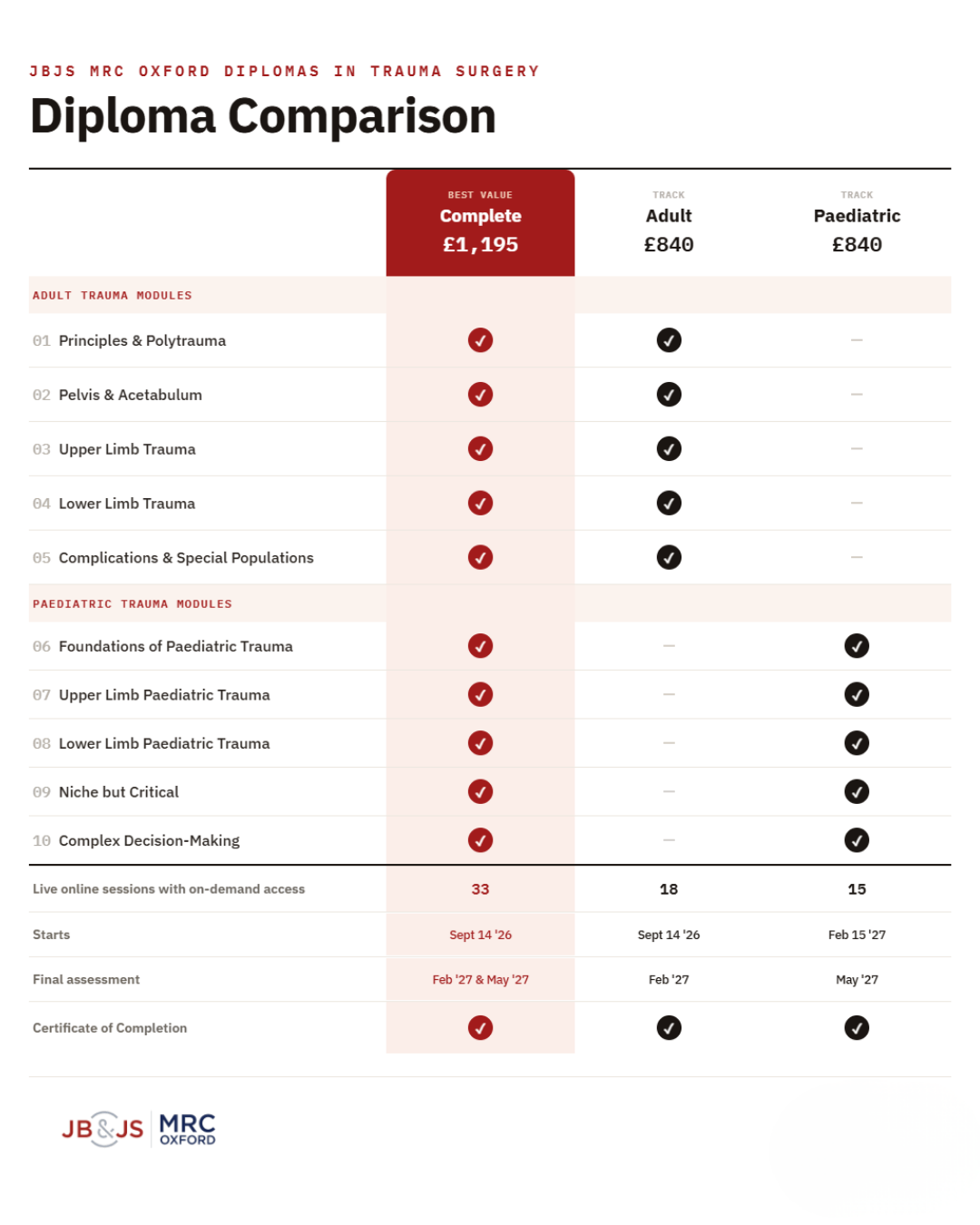
Diploma Comparison:
Not sure which diploma is for you? View the Diploma Comparison chart, or contact Sue Turner at trauma@mrcoxford.co.uk
Contact:
For more details please contact Sue Turner at trauma@mrcoxford.co.uk